How to Handle a Second Language in Your Wedding Ceremony
Weddings are about bringing people together, not just two individuals, but entire families, traditions, and sometimes even languages. If you or your guests speak different languages, integrating a second language into your ceremony can make everyone feel seen and included. It’s a beautiful gesture that honors your shared story and the diversity of your loved ones.
Start with Understanding Your Guest List
Before making any decisions, take a moment to understand who will be attending. If a significant group of guests speaks only Spanish, German, or another language, consider how you can make the ceremony accessible to them. The goal isn’t to perfectly translate every word but to convey emotion and connection across languages.
Choose the Right Approach
There are several ways to incorporate multiple languages into a ceremony:
- Bilingual officiant. If your officiant is fluent in both languages, interweaving both throughout the ceremony can be seamless. Alternating key moments like vows, readings, or blessings, helps engage everyone equally.
- Co-officiants. Some couples choose two officiants who share the responsibility, each leading portions in their language. This can add a beautiful rhythm and balance to the flow.
- Summary translations. If a full bilingual service isn’t practical, provide brief translations after major moments. For example, after the vows, a short summary in Spanish can help non-English speakers follow along without interrupting the emotional flow.
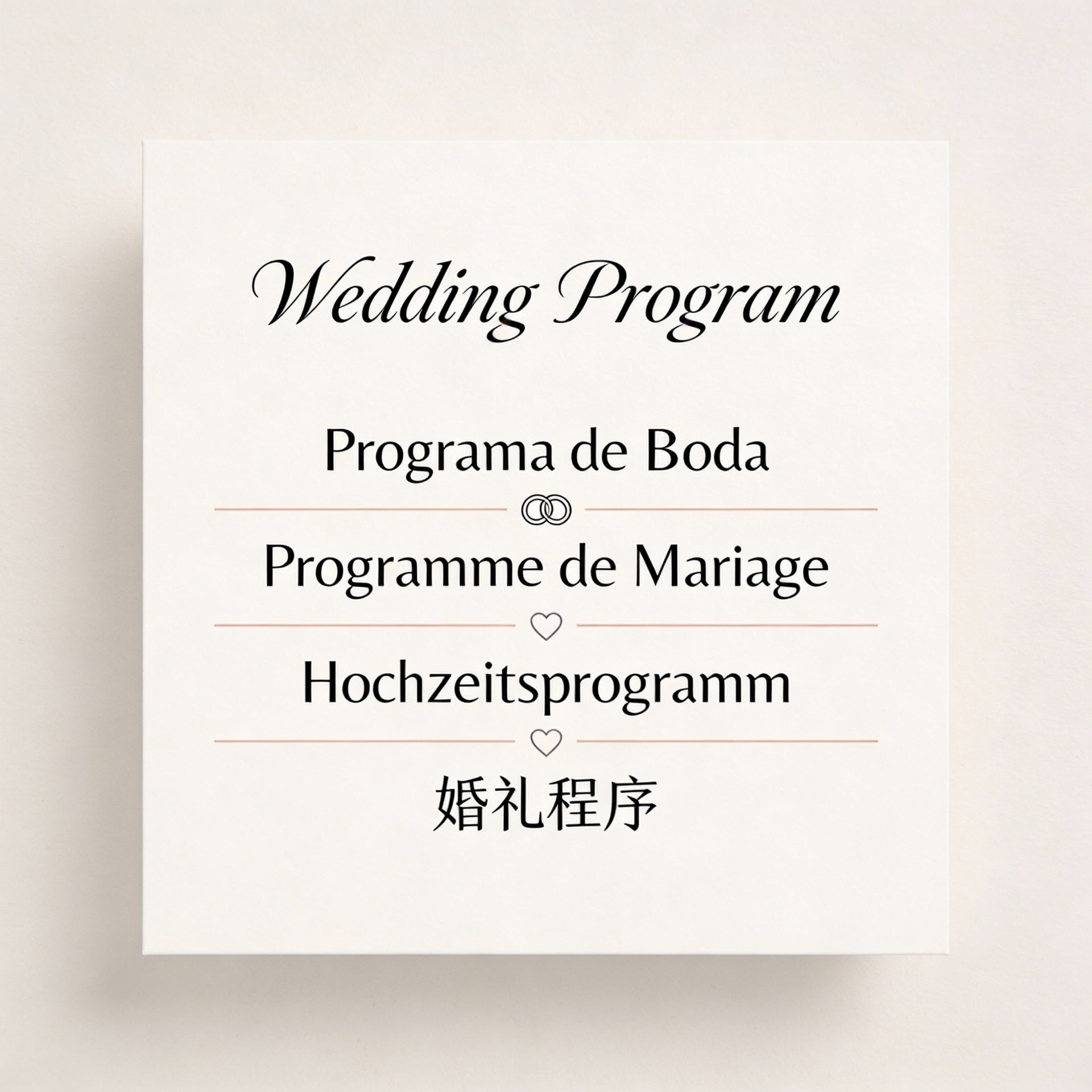
- Printed translations. Including both languages in your ceremony program allows guests to follow the script quietly, helping them connect even when they can’t understand every spoken word.
Focus on the Emotional Language
While words are important, emotion is universal. Eye contact, tone, smiles, and touch communicate far more than perfect grammar ever could. Encourage your officiant and each participant to be expressive, warm, and present. Even guests who cannot understand the words will feel the meaning through the atmosphere.
Include Cultural Touches
Language and culture go hand in hand. Consider adding traditions, blessings, or songs from both backgrounds. A German “Hochzeitskerze” (wedding candle) or a Spanish “arras” coin exchange can bridge both sides of the family. Music is another great unifier. A song in each language can create harmony without translation.
Plan Ahead with Professionals
Communication is key with your officiant, translator, or ceremony coordinator. Discuss your priorities early: which parts should be bilingual, which should stay in one language, and how to keep timing smooth. A professional officiant experienced in multicultural weddings can help design the script so both languages flow naturally.
A Celebration of Connection
Handling a second language in your wedding isn’t just about logistics, it’s about love in its most inclusive form. When your guests hear their language represented, they don’t just understand the words; they feel welcomed into your union. And that feeling, more than anything, is what a great ceremony is all about.